


A hospital can have advanced surgical technology without necessarily offering the same range of minimally invasive care as another hospital.
What matters is how that technology fits into the wider surgical programme, whether experienced specialists are available, which procedures they routinely perform, what diagnostic and anaesthesia support exists, and how patients are cared for after surgery.
For someone comparing hospitals in Delhi, these details give a more useful picture than simply looking at the equipment available.
What does minimally invasive surgery involve?
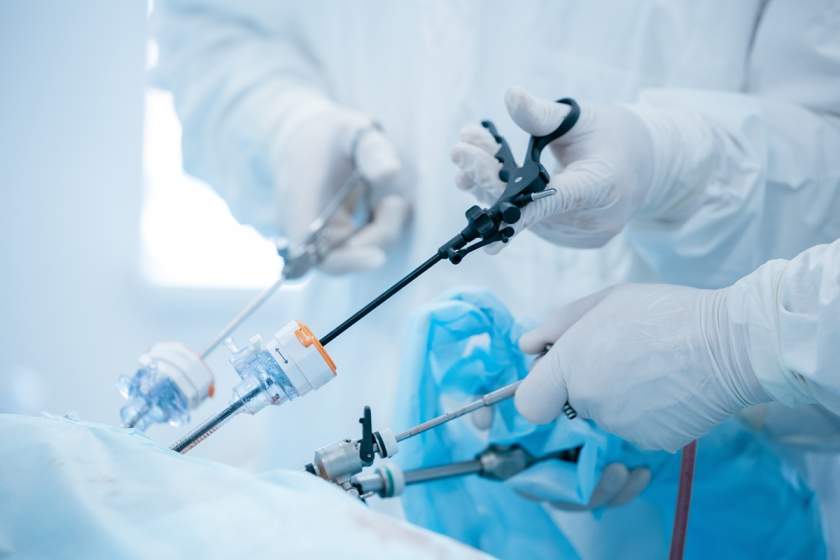
The main difference is the way the surgeon reaches the area that needs treatment. The procedure is carried out through a few small openings using specialised instruments and a camera, which gives the surgical team a clear view of the area on a screen.
The approach is now used for several types of surgery, including procedures involving the gallbladder and heart.
For patients, one of the noticeable differences can come after the operation. Smaller incisions may mean less bleeding, less discomfort and a shorter hospital stay, although recovery varies from one procedure and patient to another.
This is something to keep in mind when looking for the best hospital for minimal invasive surgery in delhi. The question is not simply whether a hospital offers minimally invasive surgery, but whether it offers the technique for the procedure you actually need.
Technology is only one part of it
Modern cameras and specialised instruments have changed what surgeons can do through small incisions. But the equipment itself is only one part of the process.
The surgeon still decides how the procedure should be performed and makes the important decisions during the operation. Technology helps provide a clearer view and allows specialised instruments to be used through smaller openings.
So when comparing hospitals, it is worth asking which procedures their teams routinely perform using minimally invasive techniques.
That makes a search for the Best hospital in Delhi for keyhole surgery more useful too. Rather than comparing equipment lists, patients can look at the particular surgery they need and whether that approach is offered for it.
Heart surgery is one area where the change is clear
Minimally invasive techniques have also changed the way some heart procedures are performed.
In some cases, surgeons can repair or replace heart valves through small incisions, using specialised instruments and high-definition imaging instead of opening the chest in the traditional manner.
The surgery itself may take a similar amount of time to a traditional operation. The difference can become more noticeable afterwards, with patients often able to start walking within a day and feel back to normal sooner.
Of course, recovery is not identical for everyone. The procedure involved and the patient’s individual condition both matter.
Recovery deserves attention too
For most patients, the operation is only one part of the experience. What happens over the following days matters just as much.
Minimally invasive surgery can make movement easier and may reduce the amount of time spent in hospital. Smaller incisions can also make the healing process more comfortable for many patients.
This is where faster recovery after surgery becomes relevant, but it should not be treated as a promise. Recovery depends on the operation, the patient’s health and how the individual responds to treatment.
A hospital’s post-operative care is therefore worth considering alongside its surgical capabilities.
Look at the wider surgical team
A minimally invasive procedure involves more than the surgeon and the equipment in the operating room.
Anaesthesia, diagnostics and post-operative monitoring are all part of the patient’s care. This becomes particularly relevant when someone may need input from more than one speciality.
For patients looking at multi specialty surgical care, the availability of different areas of expertise can therefore be an important part of the comparison.
Questions worth asking before choosing
A few straightforward questions can make the process easier.
Start by asking whether the specific procedure can be performed using a minimally invasive approach. Not every operation is suitable for it.
Then ask which specialist performs the procedure and whether the technique is routinely used for that particular surgery.
It is also useful to understand what the expected hospital stay and recovery period may look like, as well as what post-operative care involves.
These answers can tell you much more than simply knowing that a hospital has advanced surgical technology.
Putting Surgical Expertise and Care Together
At Sant Parmanand Hospital, we use minimally invasive techniques where they are appropriate, combining modern surgical technology with specialist expertise and patient care.
Our surgical care includes minimally invasive procedures, including cardiac procedures where smaller incisions and specialised imaging can be used.
For us, the technology is a means of supporting the surgical team. The procedure still depends on clinical judgement, experience and appropriate care before and after surgery.
Choosing a hospital in Delhi
There is no single feature that makes a hospital suitable for every patient.
Someone considering minimally invasive heart surgery may have very different requirements from someone undergoing gallbladder surgery. The procedure, specialist, available technology and expected recovery all need to be considered together.
That is why searching for the best hospital for minimal invasive surgery in delhi should be the starting point rather than the whole decision.
Look at the surgery you need first. Then consider who performs it, how the technique is used and what support is available around the procedure.
Conclusion
Minimally invasive surgery has changed the experience of many operations, with smaller incisions and, in suitable cases, an easier recovery.
For patients comparing hospitals in Delhi, the most useful approach is to look beyond the technology itself. The procedure being offered, the specialist performing it, the supporting teams and the care provided afterwards all matter.
At Sant Parmanand Hospital, we continue to use minimally invasive techniques where appropriate, keeping surgical precision and the patient’s recovery in view.
If you are looking for the best hospital for minimal invasive surgery in delhi, it is worth looking at the entire picture and not just the technology.
FAQs
Which surgeries are commonly done using minimally invasive methods?
Gallbladder procedures and certain heart surgeries, including valve repair or replacement, can be performed using minimally invasive techniques.
What equipment should a hospital have for these procedures?
These procedures can be supported by appropriate diagnostic, anesthesia and post-operative care, as well as specialized surgical instruments, cameras and high-definition imaging.
What recovery benefits come with minimally invasive surgery?
Smaller cuts can mean less blood loss, less pain, and a shorter hospital stay, and patients are often able to get to their feet sooner.